

Okay we need to talk about piece counts because this is the thing that has genuinely ended friendships. Ended them. Okay, maybe this is too dramatic, and I need to stop watching trashy reality TV shows. But still. You're standing there with a puzzle box in your hands, you flip it over, or you're browsing through an online store, you click on the puzzle and see the details, and suddenly you're doing mental math about how much of your weekend you're about to hand over. We've all been there.
So let's not settle this (we're not going to settle this) but let's at least stir the pot a little.
Starting small because I have to. If you've never touched a mini jigsaw puzzle, we're talking 99 to 150 pieces, and each piece is like, the size of your fingernail. These are the ones you throw in your bag for a flight or a long car ride, or for one of those nights where you get home and genuinely cannot think anymore.
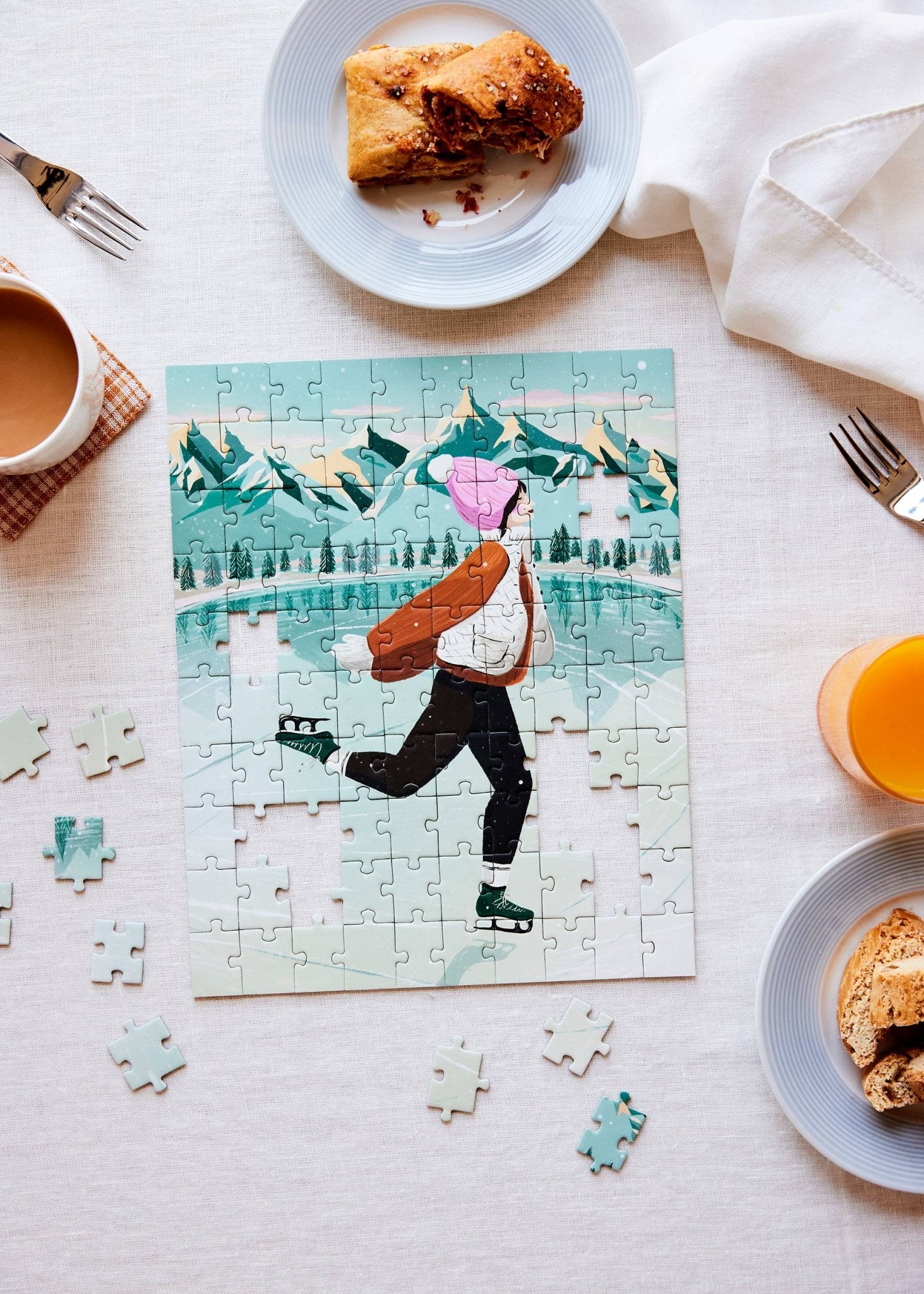
The Skater 100 Piece Puzzle from Ordinary Habit is exactly this. Peaceful little winter ice skating scene, tiny 1cm pieces, done in one sitting. Sounds easy right? And for some people it really is, fewer pieces, less time, less stress, easy win. But hand this same puzzle to someone else and you will watch them start questioning their eyesight in real time. Tiny pieces are not for everyone. What relaxes one person completely wrecks another and there's no in between here.
Then you've got Team 500 (500 piece jigsaw puzzles) and under, my personal quick win crowd. Rainy afternoon puzzle, palate cleanser between bigger builds, easy win when you need one. Honestly this is the gateway drug for most puzzlers, the "let's see if I even like this" starter pack.
Full disclosure, that was literally me. I started with two 500 piece puzzles and finished both in one weekend. No breaks, no regrets, just pure "I need to see this through" energy. And somewhere in puzzle number two a weirdly competitive side of me showed up that I did not know I had, like I was racing someone. Who? No clue. Myself maybe. The cats definitely weren't helping.
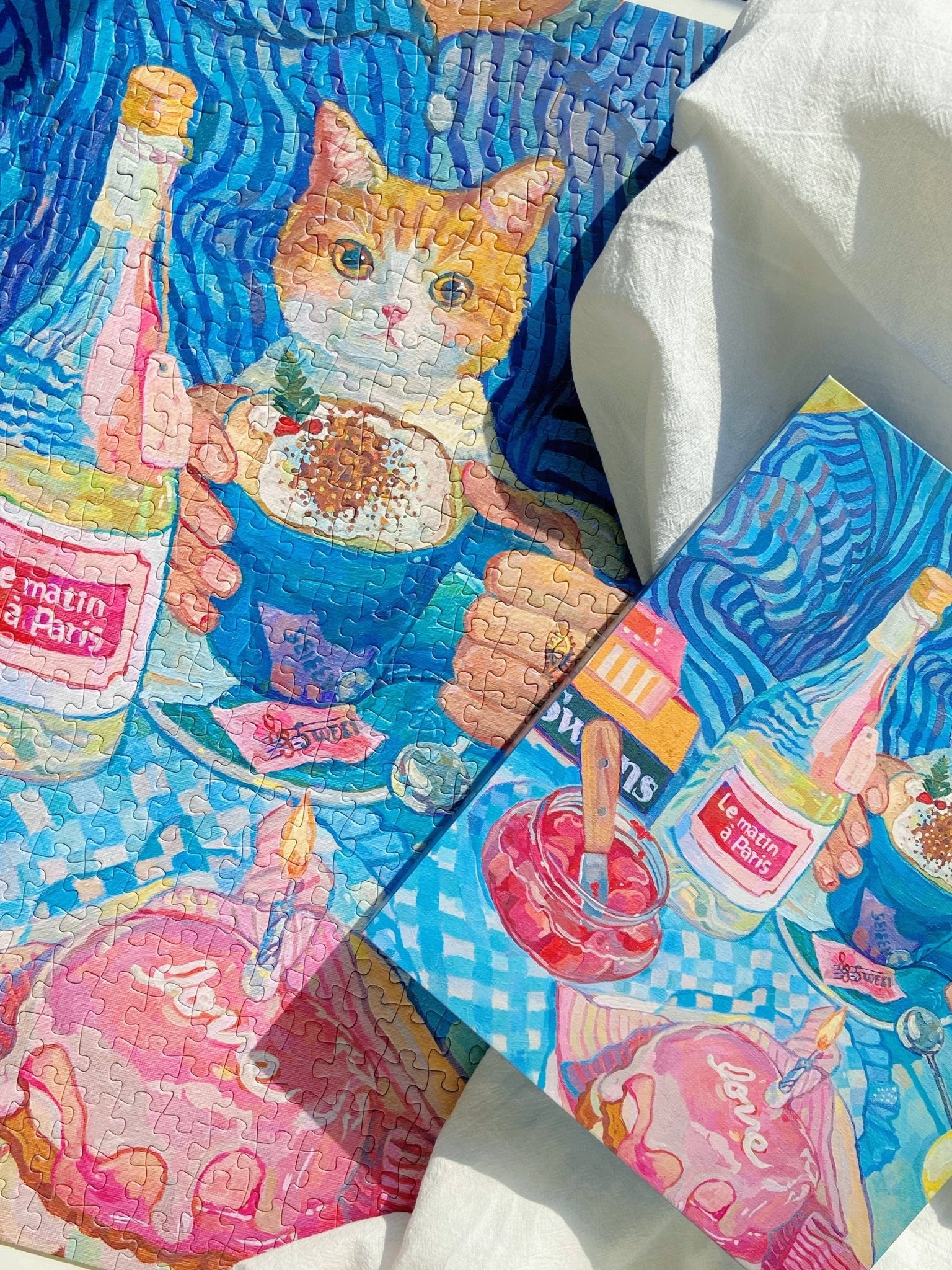
Kitty Café from WEVE Puzzle is a perfect one to start with if this sounds like you. It's a Parisian cat café scene that's so saturated and chaotic looking you'll genuinely forget you're only working with 500 pieces.
And don't let small counts fool you either, because we also carry 300 pieces and under, and rumor has it (I'm not confirming or denying anything) someone in our community had a full breakdown over a 300 piece puzzle they just could not finish. Small piece count does not mean small challenge, sometimes it's the opposite.
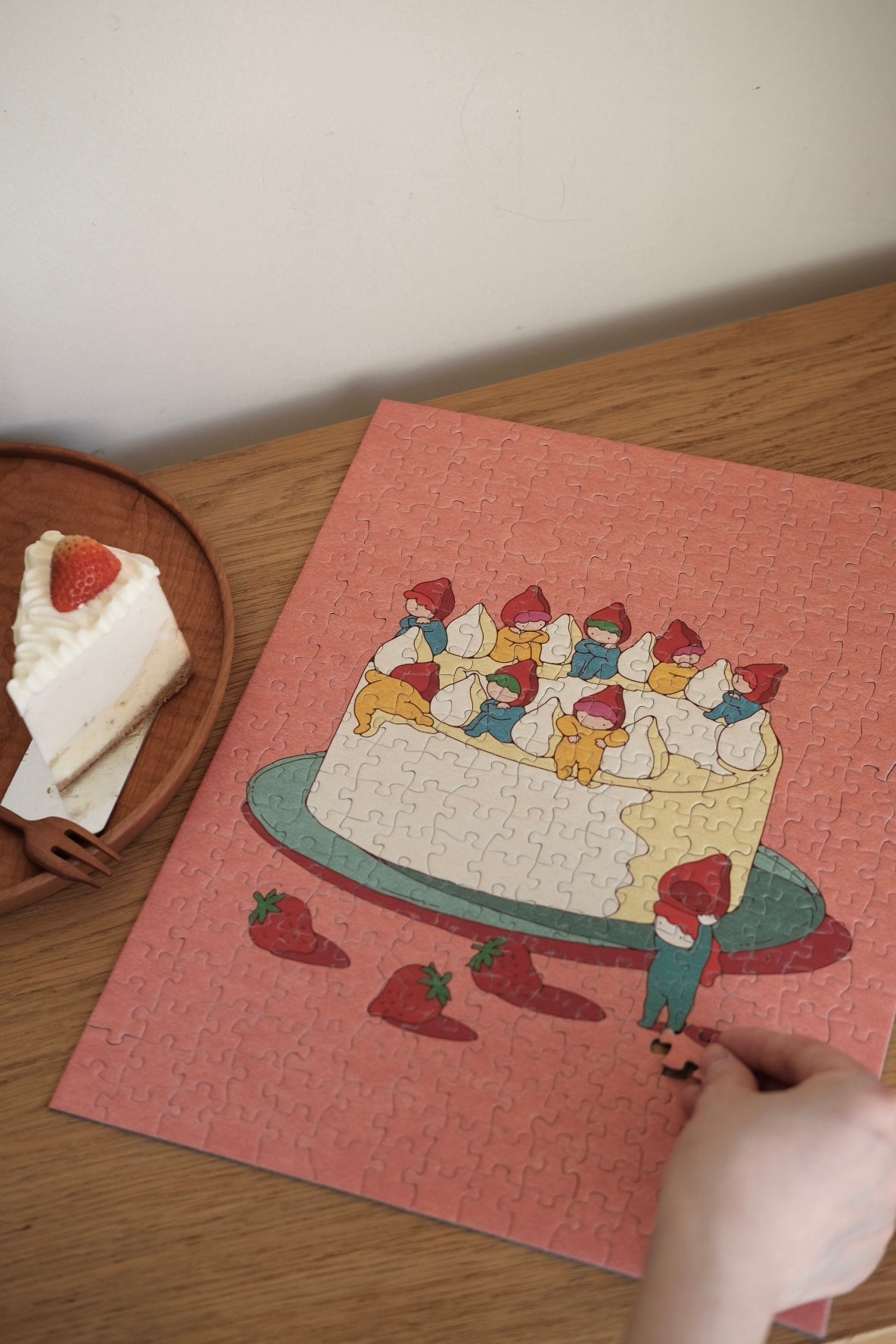
Strawberry Cake from The Puzzle Theory is exactly the kind of "quick little build" that can apparently still humble a grown adult.
Which brings me to the actual plot twist of this whole post: piece count means nothing without talking about what's actually IN the image. A busy, detail packed puzzle can honestly be easier than a smaller one that's mostly one flat color. Sky, ocean, a patterned handbag that's like three shades of brown the whole way through, you know the type.
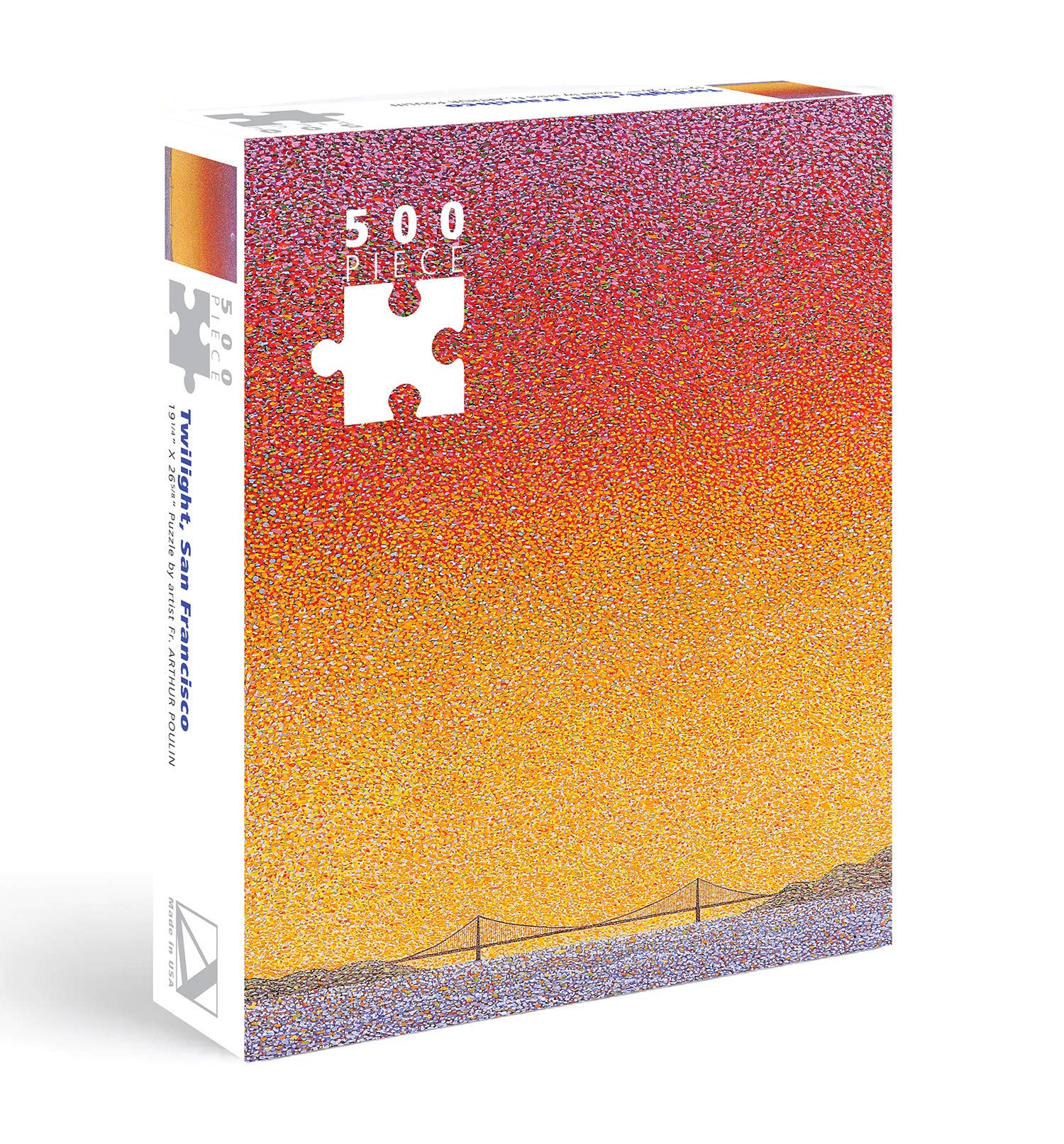
Twilight, San Francisco from Allport Editions is a perfect example. From far away it looks like a simple gradient sky going from red to gold. It is NOT simple. It's made of thousands of tiny pointillist dots, and the part where the color actually shifts is honestly the easy part. It's the long stretches of nearly identical dots with zero visual landmarks that will eat your entire evening.
Meanwhile a puzzle packed with variety and detail everywhere can go faster than you'd think even with more pieces.
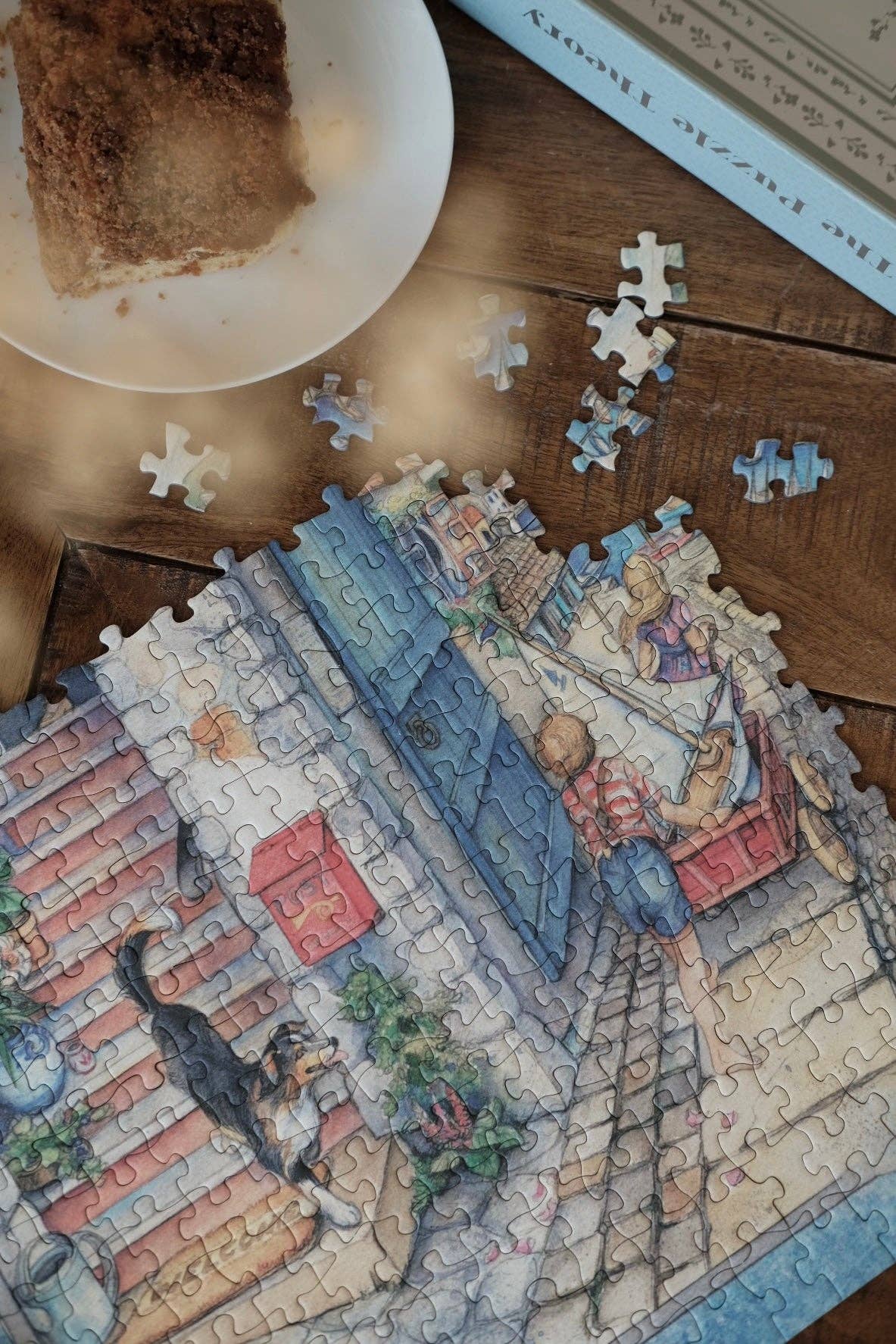
To the Harbor from The Puzzle Theory is technically just under 1000 pieces (896 to be exact) but it's so packed with detail, a stone archway, roses, sailboats, a dog, a cat, that all that visual variety actually makes it easier to place pieces than you'd expect for something this size.
More pieces doesn't always mean more suffering. Fewer pieces doesn't always mean an easy afternoon. Sometimes it's 300 pieces of solid teal that humbles you the hardest, and I stand by that.
If piece counts had a popularity contest 1000 would win easily, and it's also our biggest category, so there's a 1000 piece puzzle out there for basically any vibe you're going for.
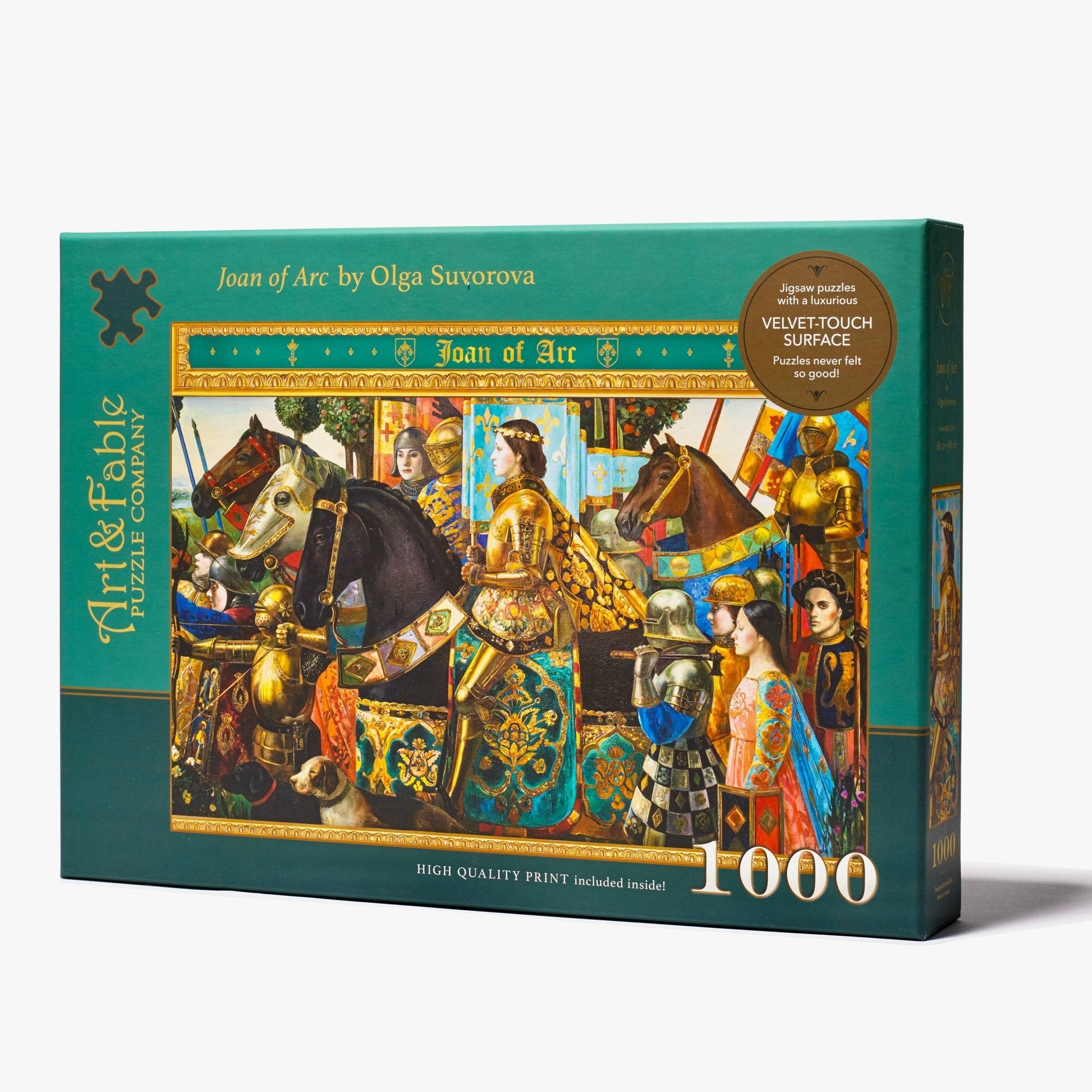
Joan of Arc from Art & Fable is history, fine art, and a woman in power all in one box, and honestly? Some puzzles are just built different.
And for the record not everyone fits into 500, 1000, or 2000 neatly either. We've got 750 piece and 1500 piece puzzles for the people who like living outside the box, plus the occasional oddball like a 400 piece round puzzle that doesn't respect any category we just spent this whole post defending.
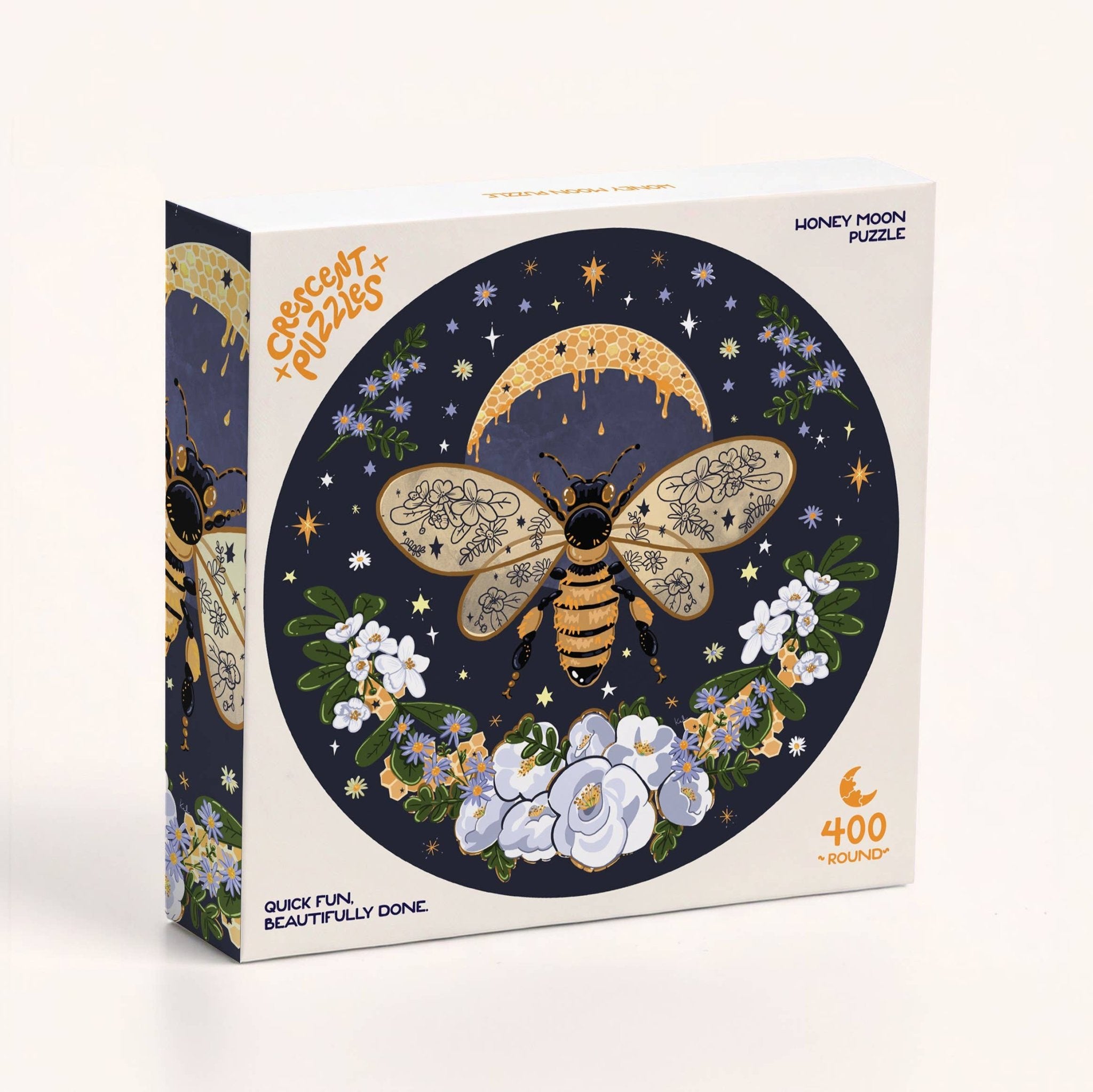
Honey Moon from Crescent Puzzles is exactly that oddball, celestial bee art, round shape, 400 pieces, zero regard for the rules.
The Playground from New York Puzzle Company is a 1500 piece one worth mentioning too, and bonus, it's a random cut, which we're about to get into.

And then there's the other camp completely, the people who see 500 pieces and scoff. For Team 2000 and beyond, a puzzle isn't something you complete, it's an ERA of your life. It lives on your table for weeks. It becomes part of the household.
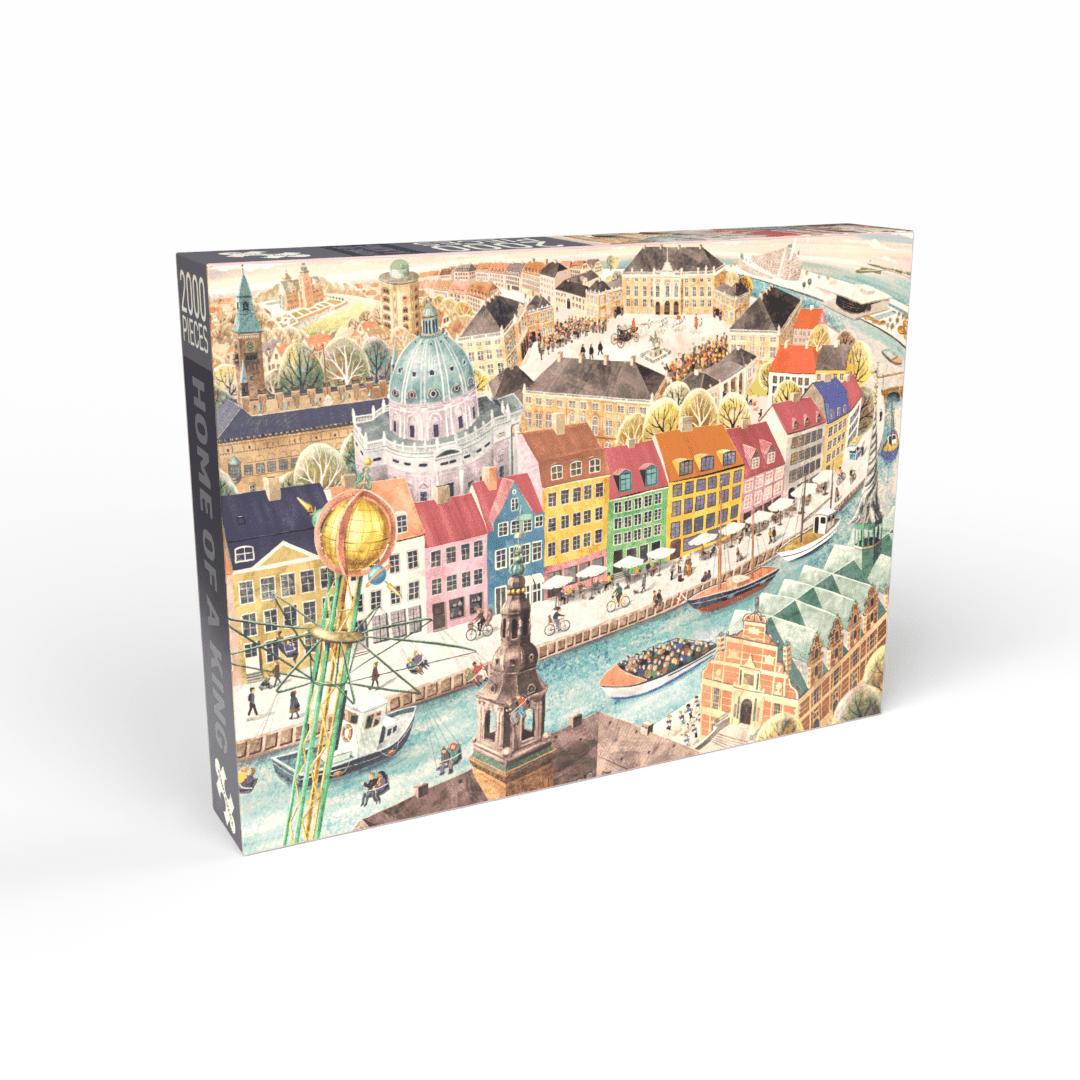
Home of a King from Penny Puzzle is a sprawling Copenhagen cityscape that's basically asking you to commit to it for a month, so if that's your thing, there you go.
Okay since we're already deep in hot takes, let's do ribbon cut vs random cut, because this isn't even one single fight, it changes completely depending on the brand. Take Galison for example (personal experience talking here, one of my very first TPC puzzles was a Galison).
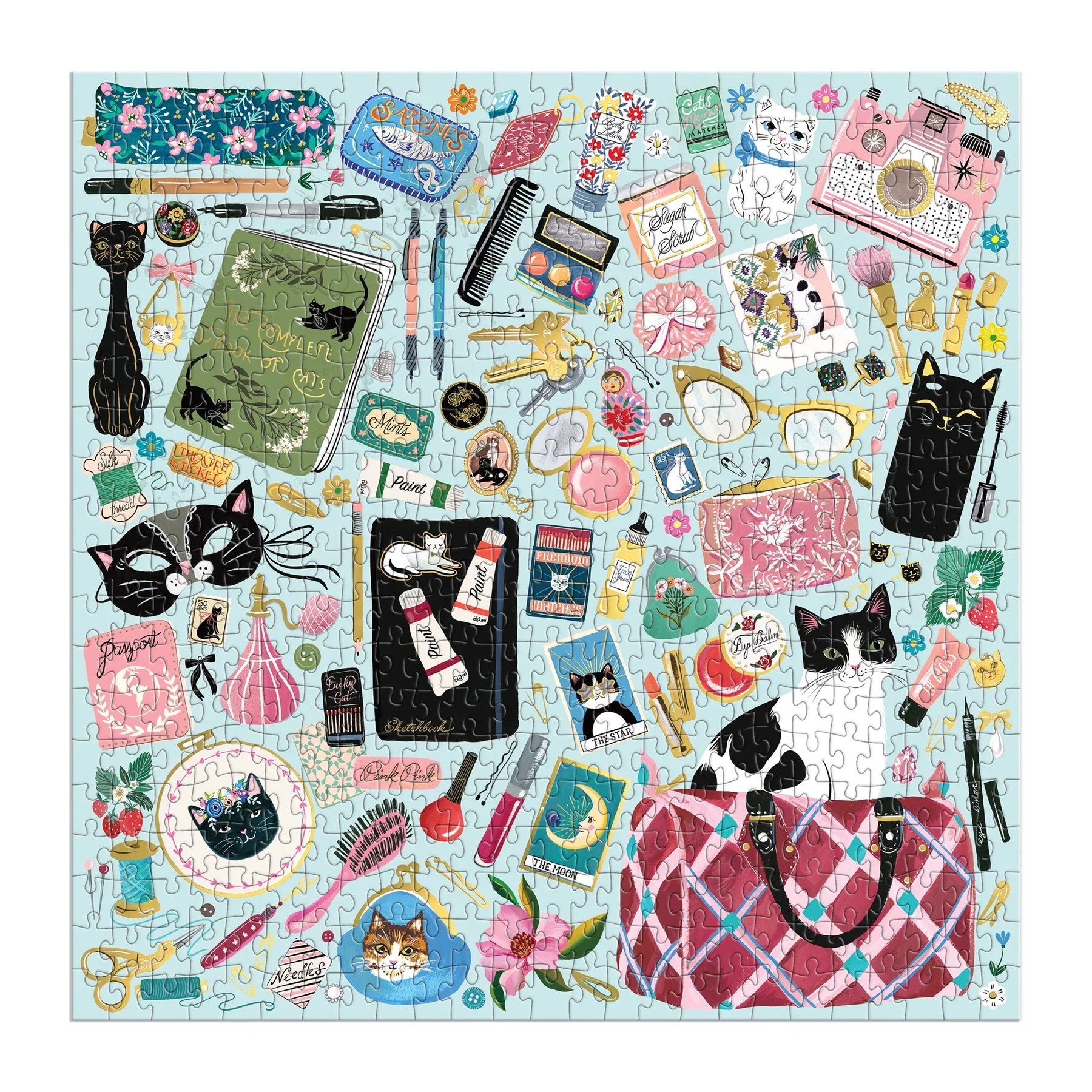
Purrfect Accessories from Galison is a grid cut puzzle, which means the pieces come in two shapes basically, ones with two "outies" and ones with two "innies." You'd think once you notice this pattern sorting becomes easy and systematic. It does not. You will still assume an outie piece fits into literally any innie piece and that is not how it works, especially in a section that's a solid color or a busy repeating pattern where every piece looks nearly identical to the last.
Random cut is a whole different kind of chaos. The pieces are so irregular that even when you KNOW roughly where something goes, actually placing it can take forever because the shape itself gives you zero hints.
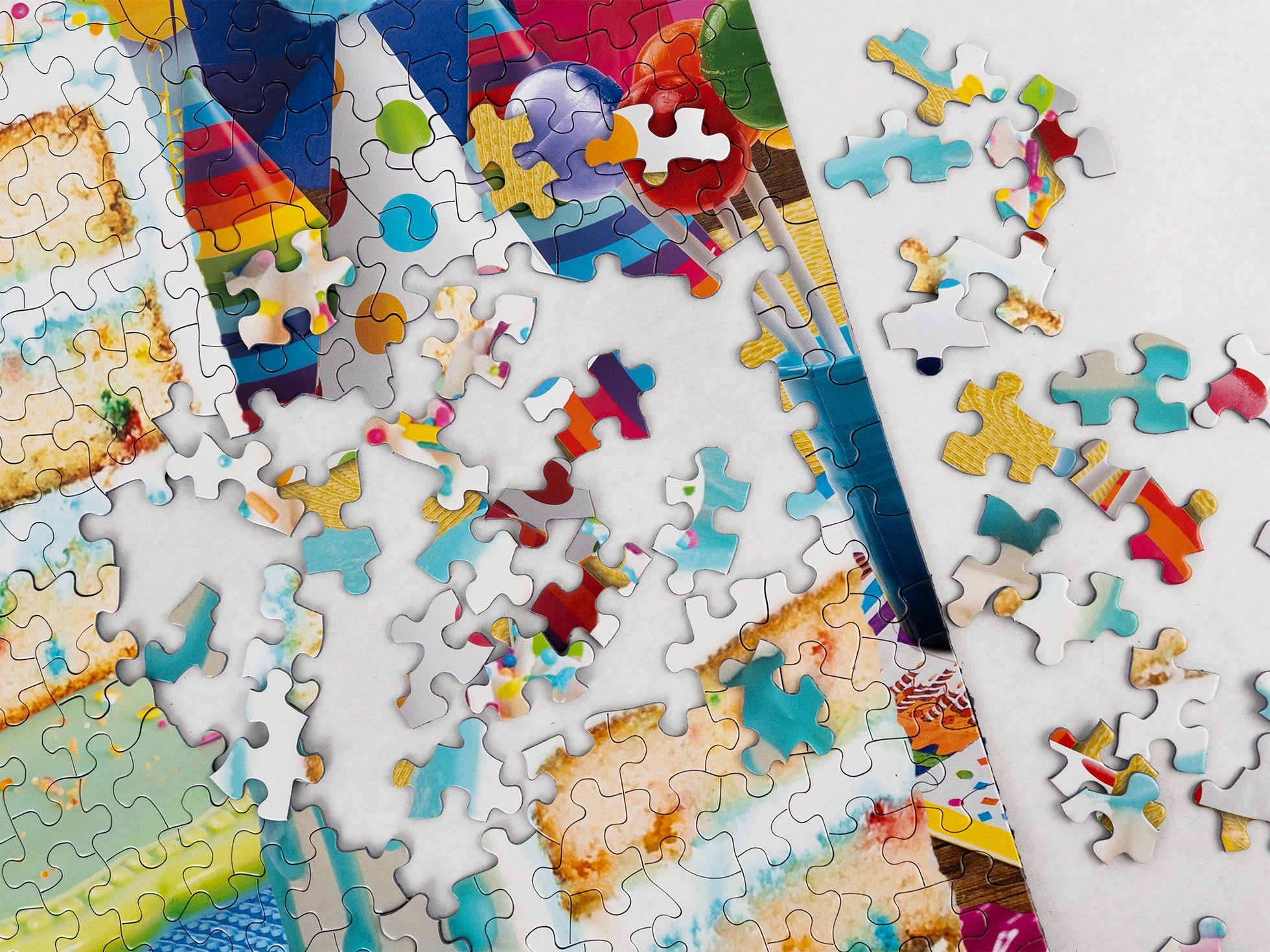
Birthday Cake from Springbok is a great one to point at here. It's random cut, and it's an explosion of color, cake, sprinkles, balloons, lollipops, the whole party. You'd think all that color variety makes it easy to sort by section, but the piece shapes themselves don't care about the picture at all. You're matching shape to shape as much as color to color, which is a different kind of puzzle brain entirely.
And while we're airing out literally every puzzle opinion I have: are you a sorter or a diver? Some people won't touch a single piece until every edge is separated and every color is grouped into neat little piles. Other people just dump the box out and start connecting whatever fits, chaos be damned. And even within "diver" there's a split, edges first no exceptions, versus people who don't care about the border at all and just start wherever a piece catches their eye first.
Honestly maybe none of this is even about piece count. Maybe it's about you. The methodical sort everything first people lean into structure. The intuitive dive right in people lean into feel. Neither is wrong but it might explain why you and your puzzle partner can't agree on literally anything.
So. Mini or 500, ribbon or random, sorter or diver, left brain or right brain, tell me where you land and why you're right and everyone else is wrong.
Drop it all in the comments. We want the debate. We want the passionate defenses. We want someone to bring up that one 300 piece puzzle that broke them.